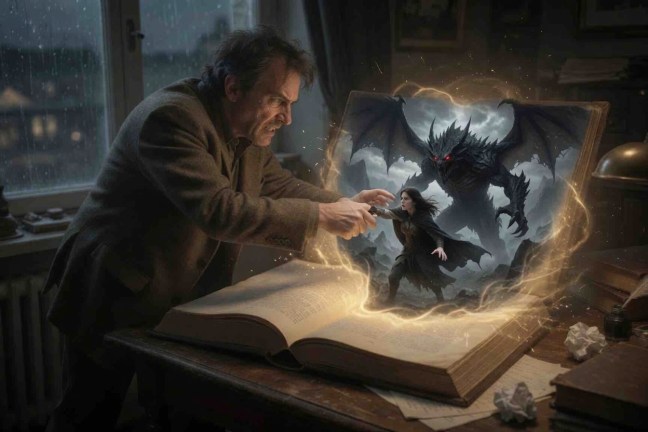
Writers are often told to become butchers.
“Kill your darlings” originally meant something simple: remove the parts of a story you love if they weaken the story. That advice matters. Every writer learns that a beautiful paragraph can hurt pacing, a favorite joke can ruin tension, or a subplot can bury the heart of a novel. Stories require discipline because storytelling is both art and structure. Every scene, character, and line must earn its place.
The problem is that many writers have turned this advice into a philosophy. Characters become tools instead of people. If they stop serving the plot, they are discarded. If a shocking death creates a reaction, they are sacrificed. Readers notice this, even if they cannot explain why. Stories stop feeling lived in and start feeling manufactured.
The best fictional worlds feel inhabited because the characters seem to exist beyond the page. Tolkien understood this well. Even minor figures in Middle-earth carry weight because they feel connected to a larger history. Some characters die and others fade away, but few feel disposable. That depth comes from care as much as craft.
George R. R. Martin shows the same balance. Ned Stark is remembered not because he dies, but because he feels like a complete man before he dies. He has honor, fears, duties, and flaws that make him feel real. Remove that humanity and the death becomes a cheap trick. Pain is not depth, and shock is not maturity.
Arthur Conan Doyle learned this lesson when he tried to kill Sherlock Holmes because he had grown tired of writing him. Readers reacted as though a real person had died. Doyle eventually brought Holmes back because the character had become more than a device for solving mysteries. He had become someone readers cared about.
There is also a practical reason not to destroy every character or subplot that fails in one manuscript. Sometimes a character is not wrong. He is simply in the wrong story. Many writers keep orphaned scenes, dialogue, and characters for later use. A side character who hurts one novel may become the center of another. Stephen King has spoken about how characters sometimes begin steering stories once they come alive on the page. Good writers learn to recognize when that happens.
None of this means writers should refuse to cut material that weakens a story. Some characters must die. Some stories require tragedy. Mercy can weaken a narrative as easily as cruelty can cheapen one. The point is not to save everything. The point is to remember stewardship.
A gardener prunes branches so the tree grows stronger. He does not salt the earth.
The best stories are written by authors who understand the difference between removing what weakens a story and protecting what gives it a soul. Not every darling deserves execution. Some deserve patience. Some deserve another story. And sometimes the character you almost erased becomes the one readers remember long after the final page.

